
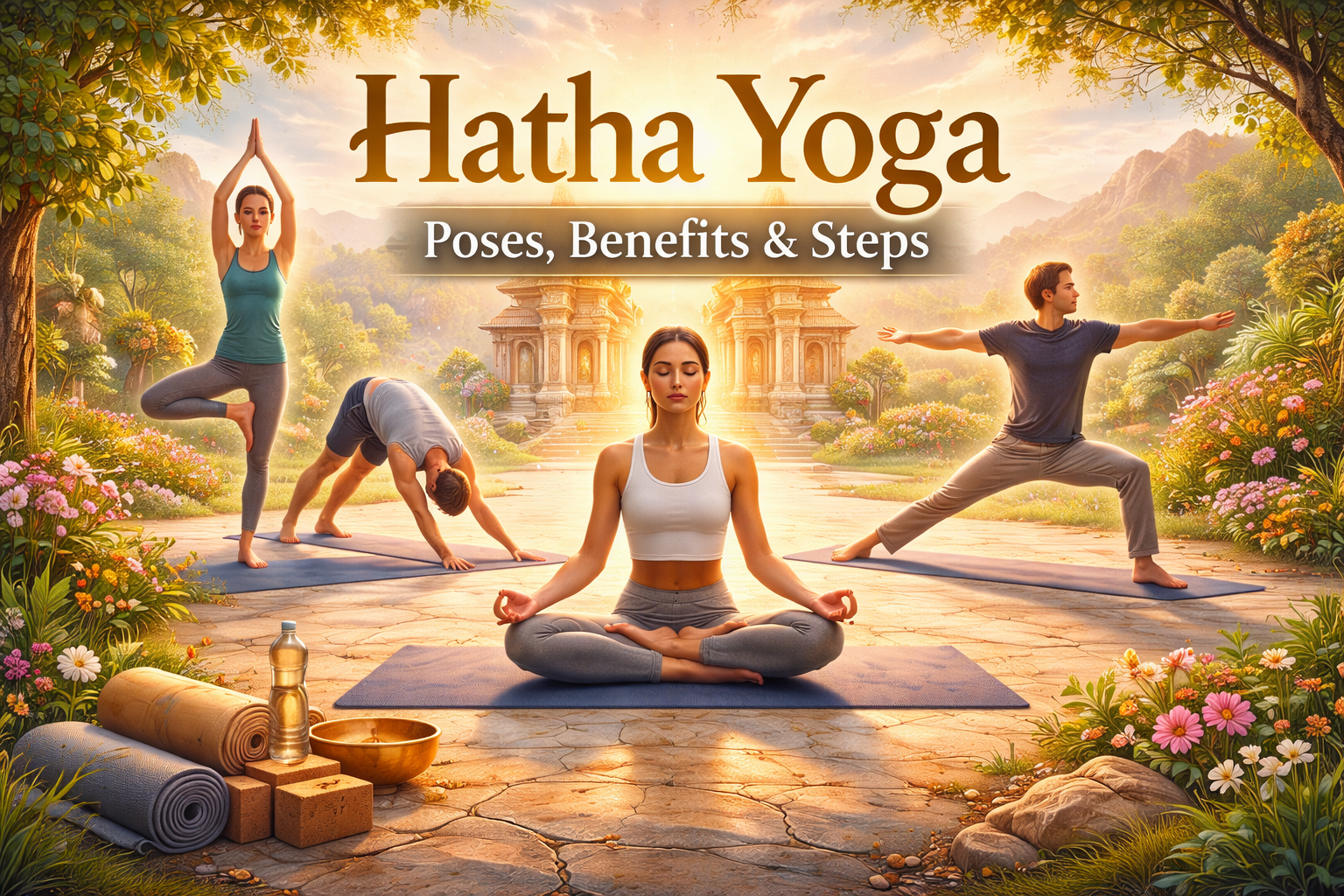
Hatha Yoga – Poses, Benefits & Steps: A Complete Guide for Beginners and Practitioners
Hatha Yoga is one of the oldest and most authentic forms of yoga, forming the foundation of almost all modern yoga styles practiced today. Known for its gentle pace, mindful movements, and deep connection between body and breath, Hatha Yoga offers a balanced approach to physical health, mental clarity, and inner peace.
In this in-depth guide, you will learn:
- What Hatha Yoga is
- Essential Hatha Yoga poses
- Powerful Hatha Yoga benefits
- Step-by-step Hatha Yoga steps
- Answers to common questions people ask
What Is Hatha Yoga?
The word Hatha comes from Sanskrit:
- “Ha” means sun
- “Tha” means moon
Hatha Yoga represents the balance of opposing energies—strength and flexibility, effort and ease, body and mind. Traditionally, Hatha Yoga is a preparatory practice that cleanses and strengthens the body to support meditation and higher awareness.
Unlike fast-paced yoga styles, Hatha Yoga focuses on:
- Holding poses for longer durations
- Controlled breathing
- Mindful awareness
- Proper alignment
Origins and Philosophy of Hatha Yoga
Hatha Yoga originated in ancient India and is rooted in yogic texts such as:
- Hatha Yoga Pradipika
- Shiva Samhita
- Gheranda Samhita
These texts describe Hatha Yoga as a scientific system designed to purify the body, regulate energy (prana), and awaken spiritual potential.
Hatha Yoga is not just exercise—it is a discipline of self-mastery.
Hatha Yoga Poses (Asanas)
Hatha Yoga poses are practiced slowly with awareness, making them ideal for beginners as well as advanced practitioners.
- Tadasana (Mountain Pose)
- Improves posture
- Enhances body awareness
- Strengthens legs and spine
- Vrikshasana (Tree Pose)
- Improves balance and focus
- Strengthens ankles and legs
- Calms the nervous system
- Adho Mukha Svanasana (Downward Dog)
- Stretches the spine and hamstrings
- Boosts circulation
- Relieves fatigue
- Bhujangasana (Cobra Pose)
- Strengthens the spine
- Improves lung capacity
- Stimulates abdominal organs
- Paschimottanasana (Seated Forward Bend)
- Calms the mind
- Stretches the back body
- Improves digestion
- Trikonasana (Triangle Pose)
- Improves flexibility
- Stimulates internal organs
- Strengthens legs and core
- Balasana (Child’s Pose)
- Relieves stress
- Restores energy
- Gently stretches hips and back
- Shavasana (Corpse Pose)
- Deep relaxation
- Integrates practice benefits
- Reduces anxiety and stress
These Hatha Yoga poses are typically combined with conscious breathing and rest periods.
Hatha Yoga Benefits
The benefits of Hatha Yoga extend far beyond physical fitness. It works holistically on the body, mind, and energy system.
Physical Benefits of Hatha Yoga
- Improves flexibility and mobility
- Strengthens muscles and joints
- Enhances posture and spinal health
- Boosts immunity
- Improves digestion and metabolism
Mental Benefits of Hatha Yoga
- Reduces stress and anxiety
- Improves concentration and memory
- Calms the nervous system
- Enhances emotional balance
Spiritual Benefits of Hatha Yoga
- Increases body awareness
- Balances pranic energy
- Prepares the mind for meditation
- Promotes inner peace and clarity
Unlike intense workouts, Hatha Yoga is sustainable, gentle, and deeply restorative.
Who Should Practice Hatha Yoga?
Hatha Yoga is suitable for:
- Beginners
- Seniors
- People recovering from injury
- Office workers
- Anyone seeking balance and mindfulness
Because of its slow pace, Hatha Yoga allows practitioners to listen to their body and progress safely.
Hatha Yoga Steps: How to Practice Correctly
Following the correct Hatha Yoga steps ensures safety, effectiveness, and deeper benefits.
Step 1: Preparation
- Practice on an empty stomach
- Choose a calm, clean space
- Wear comfortable clothing
Step 2: Centering and Awareness
- Sit quietly for a few minutes
- Observe the breath
- Set an intention for your practice
Step 3: Asana Practice (Hatha Yoga Poses)
- Move slowly between poses
- Hold each posture with steady breath
- Focus on alignment and awareness
Step 4: Pranayama (Breathing Practices)
Common pranayama in Hatha Yoga:
- Anulom Vilom
- Nadi Shodhana
- Bhramari
These techniques regulate energy and calm the mind.
Step 5: Relaxation (Shavasana)
- Lie down comfortably
- Allow the body to fully relax
- Integrate the effects of the practice
Step 6: Meditation (Optional)
- Observe the breath or inner silence
- Cultivate mindfulness and clarity
These steps form a complete Hatha Yoga practice.
Hatha Yoga vs Other Yoga Styles
| Feature | Hatha Yoga | Vinyasa Yoga | Ashtanga Yoga |
|---|---|---|---|
| Pace | Slow | Moderate | Fast |
| Focus | Alignment & breath | Flow | Discipline |
| Best for | Beginners | Fitness | Advanced practitioners |
| Relaxation | High | Medium | Low |
Hatha Yoga remains the foundation of all yoga styles.
How Often Should You Practice Hatha Yoga?
- Beginners: 3–4 times per week
- Regular practitioners: Daily
- Even 30 minutes per session can bring noticeable benefits
Consistency matters more than intensity.
Common Mistakes in Hatha Yoga
- Rushing through poses
- Ignoring breath awareness
- Overstretching
- Skipping relaxation
Hatha Yoga teaches patience and mindfulness, not performance.
People Also Ask – FAQs
- What is Hatha Yoga?
Hatha Yoga is a traditional form of yoga focusing on physical postures, breath control, and mindfulness.
- What are Hatha Yoga poses?
Hatha Yoga poses are slow, steady postures held with awareness to improve strength, flexibility, and balance.
- What are the main Hatha Yoga benefits?
Improved flexibility, reduced stress, better posture, mental clarity, and overall well-being.
- Is Hatha Yoga good for beginners?
Yes, Hatha Yoga is ideal for beginners due to its gentle pace and focus on alignment.
- What are the steps of Hatha Yoga?
Preparation, asana practice, pranayama, relaxation, and meditation.
- Can Hatha Yoga help with stress?
Yes, it calms the nervous system and reduces anxiety effectively.
- How is Hatha Yoga different from Vinyasa?
Hatha Yoga is slower and more mindful, while Vinyasa is faster and flow-based.
- How long should a Hatha Yoga session be?
Typically 45–90 minutes, but even 30 minutes is beneficial.
- Can Hatha Yoga be practiced daily?
Yes, daily practice is safe and highly beneficial.
- Does Hatha Yoga include meditation?
Yes, meditation is often included to deepen awareness and relaxation.
Final Thoughts
Hatha Yoga is more than a physical practice—it is a complete system for balanced living. By practicing Hatha Yoga poses with awareness, understanding the benefits, and following the proper steps, you create harmony between body, breath, and mind.
In a fast-paced world, Hatha Yoga reminds us to slow down, breathe deeply, and reconnect with ourselves.